
Understanding Insulin Resistance and Type 2 Diabetes

By Dr. Gerald Thang
Principal Physician
MBBS (Singapore), MRCP (UK), Graduate Diploma in Cardiology
Most people believe that Type 2 Diabetes happens overnight. In reality, your body often spends 10 to 15 years fighting a "silent war" to keep your blood sugar stable. By the time blood sugar rises, the damage has often already begun. See the "Blue Peak" below. This is the most critical window where chronic disease can still be reversed.
| Clinical Indicator | Phase 1: Insulin Resistance | Phase 2: Type 2 Diabetes |
|---|---|---|
| Insulin Level | Rising (Over-compensation) | Falling (Pancreatic Burnout) |
| Glucose Level | Maintained (The "Silent" Phase) | Rising (Clinical Diagnosis) |
| Vascular Status | Arterial stiffening begins | Damage accelerates exponentially |
| Clinical Window | High Reversibility | Chronic Management |
Note: Standard health screenings often miss Phase 1 as glucose remains within "normal" limits while your pancreas works overtime.
A Note on Type 1 Diabetes
Unlike the metabolic "wear and tear" of Type 2, Type 1 is an autoimmune condition where the body produces zero insulin. It follows a different clinical path requiring lifelong replacement, rather than the metabolic interception and stewardship we provide for insulin resistance.
1. The Core Difference: Compensation vs. Failure
As shown in the clinical chart, the journey is divided into two distinct phases that many standard screenings miss:
- The "Hidden" Phase (Insulin Resistance): Your cells become "numb" to insulin. Your pancreas works overtime, pumping out massive amounts of insulin (the rising blue line) to keep blood sugar (the red line) normal. You feel fine, but your arteries are already under stress.
- The "Clinical" Phase (Type 2 Diabetes): Eventually, the pancreas reaches "burnout." Insulin levels drop, and because there isn't enough "fuel-shifter" left, your blood glucose levels skyrocket. This is where most medications are traditionally started (often a decade too late).
Who is Most Vulnerable?
Metabolic health is influenced by a "Triple Threat" of factors commonly seen in our Singaporean clinical practice:
- Family & Genetics: A first-degree relative with diabetes lowers your genetic "threshold," meaning you may develop resistance even at a "normal" weight.
- The Visceral Factor: Fat stored deep around the organs (the "TOFI" phenotype) releases inflammatory signals that directly block insulin action.
- Hormonal Transitions: The decline of Testosterone in men and Oestrogen in women during mid-life acts as a "metabolic lock," accelerating the transition to diabetes.
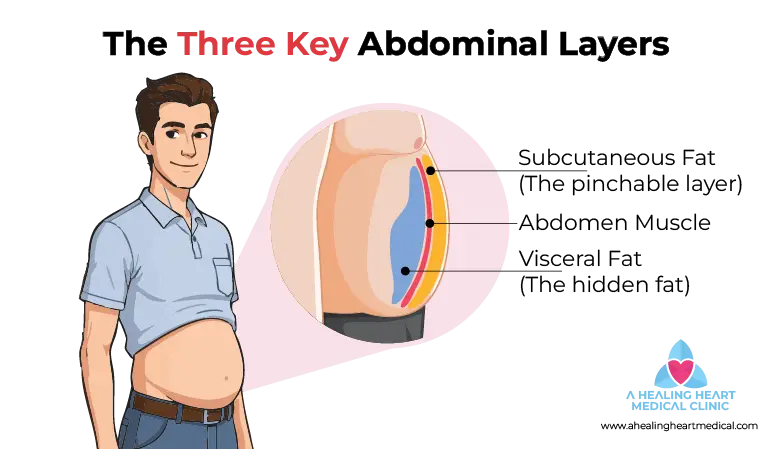
Figure 2: Illustration of safe Subcutaneous Fat vs. dangerous Visceral Fat ('The Hidden Fire').
The Symptoms You Might Miss
In the early Insulin Resistance phase, symptoms are subtle and often dismissed as "aging":
- The "Food Coma": Extreme fatigue or brain fog specifically after carbohydrate-heavy meals.
- Midsection Expansion: Difficulty losing weight around the waist despite exercise.
- Skin Changes: Skin tags or darkening of skin folds (Acanthosis Nigricans).
Why This is a "Heart Mission"
At A Healing Heart Medical, we view Diabetes as an arterial problem. High insulin and high glucose are both "corrosive" to your blood vessels. They accelerate arterial stiffening, leading to plaque buildup (atherosclerosis) and increasing the risk of heart attack and stroke. Managing insulin sensitivity is the single most effective way to protect your heart's future.
The Clinical Necessity of a Metabolic Audit
Standard health checks are designed to diagnose a disease once it has already arrived. However, as the chart illustrates, your vascular system experiences significant stress during the "Silent Decade" of insulin resistance, long before blood sugar levels actually rise.
Waiting for a "High Glucose" result is like waiting for a smoke detector to go off when the fire has already spread to the roof. We focus on the Why behind your metabolism:
- Identifying Hidden Stress: We do systemic audit that standard tests simply do not measure.
- Taking Care of Your Heart: Our goal is to determine if your body is currently "over-compensating," which leads to arterial stiffening.
- Personalised Targets By understanding your metabolic baseline, we can predict your cardiovascular risk profile over the next 10 years, rather than just looking at a snapshot of today.
Don’t Wait for the "Red Line" to Rise.
If you are in the "Silent Decade" of insulin resistance, you have a window of opportunity to reverse the damage. Schedule an audit to see your true metabolic position.
Request a Metabolic AuditFrequently Asked Questions
Can I have insulin resistance if I am thin?
Yes. This is known as the TOFI (Thin on the Outside, Fat on the Inside) phenotype. Visceral fat around the organs can drive insulin resistance even if your BMI is within the normal range.
Is Type 2 Diabetes inevitable if it runs in my family?
No. Genetics may increase your risk, but lifestyle and clinical stewardship can effectively bypass your familial timeline by maintaining insulin sensitivity.