
Why Insulin (Not Just Blood Sugar) is the Real Heart Concern

By Dr. Gerald Thang
Principal Physician
MBBS (Singapore), MRCP (UK), Graduate Diploma in Cardiology
In my clinic, I often consult with patients who are confused. They have "normal" blood sugar reports, yet their arteries show signs of premature aging. This is the "Normal Glucose Trap."
Research Findings
Landmark Cardiovascular Outcome Trials (CVOTs) have fundamentally changed how we view heart protection. Clinical data confirms that metabolic interventions reduce heart attacks and strokes independently of weight loss or diabetes status. This means that high insulin and metabolic signaling are direct toxic stressors to your vascular lining, and treating them is essential to saving the heart.
Read the SELECT Trial (The New England Journal of Medicine, NEJM, Nov 2023)What to Look Out For
Insulin resistance is a signal processing problem. Your muscle cells become "hard of hearing," forcing your pancreas to "shout" by producing more insulin. Look for these subtle red flags:
- The TOFI Phenotype: "Thin on the Outside, Fat on the Inside." Common in Asian biology where visceral fat accumulates around the heart despite a normal BMI.
- Post-Meal Brain Fog: Feeling lethargic or "crashing" after carbohydrate-heavy meals.
- Subclinical Hypertension: Blood pressure that creeps up even when you are phyiscally active and eating well.
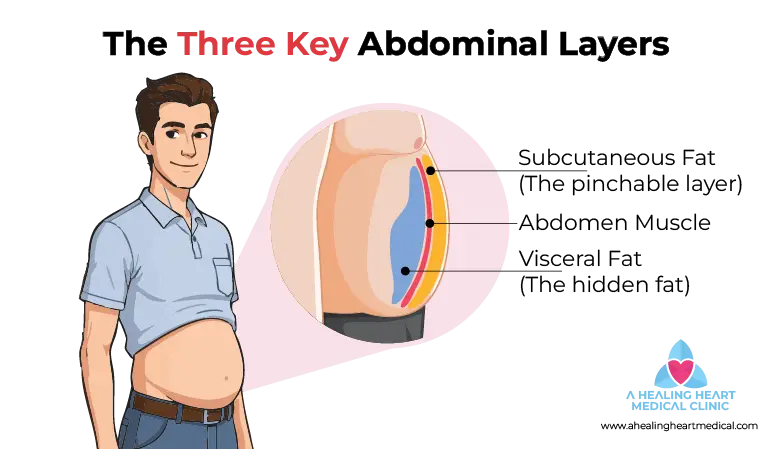
The Life Stage & Genetic Factor
Vulnerability to insulin resistance isn't just about diet; it’s about your family medical history:
- Genetic: If heart disease or diabetes runs in your family, your "Silent Decade" of vascular stress likely starts early.
- Changes in Hormones: In menopause or andropause, the loss of protective hormones acts as a "Metabolic Lock," accelerating arterial stiffening.
Beyond "Clogged Pipes": The Physics of Insulin
Heart disease is often described as a "plumbing problem" (clogged arteries). However, insulin resistance damages your heart through Physics and Signaling long before a clog ever forms:
- The Stiff Pipe Effect: High insulin acts as a growth signal, causing the smooth muscle in your artery walls to thicken. Like an old, stiff garden hose, the vessel can no longer "expand" to absorb pressure, forcing the heart to pump harder.
- The Sodium Trap: Insulin tells your kidneys to retain salt rather than flush it. This increases your total blood volume—literally putting more fluid into your system than your heart was designed to handle.
This is why "normal" blood sugar doesn't guarantee a healthy heart. Your pipes can be clear, yet under extreme structural stress.
Understanding the Chart Timeline:
- 1. The "Silent Decade": Notice the gap between the red and purple lines. Insulin resistance often starts in your 20s or 30s, working silently under the surface while your blood sugar still looks "normal."
- 2. The Acceleration: As insulin remains high, the purple line (Vascular Stiffening) begins to climb faster. This represents your arteries losing their elasticity.
- 3. The Intersection: The "Cardiovascular Event" (dot) will likely happen when the purple line crosses the dashed threshold. Our goal is to flatten these lines early, pushing that dot further out into the future or preventing the intersection entirely.
Can Lifestyle Changes Work?
Yes, but they must be targeted. Generic caloric restriction (dietary regimen that consistently reduces daily calorie intake) often fails because it rarely leads to long-term, sustainable weight loss or health improvements for most people. We focus on Zone 2 Cardio (low-intensity, endurance pace without intervals) and protein-first nutrition to restore function. However, when the risk of a cardiovascular event is high, we use metabolic medication as a clinical bridge to protect the arteries during your recovery.
Prevention & Recovery: It is Not a Death Sentence
I want my patients to understand that metabolic dysfunction is a reversible state. We focus on restoration, returning your vascular system to a state of elasticity and allowing your pancreas to return back to the functional stage.
The Critical Window of Intervention
In cardiology, time is our most valuable currency. The "Silent Decade" is not just a warning; it is a window of opportunity. Once the physics of the heart changes (the vessel walls thicken and the arteries stiffen), the effort required to reverse the damage increases exponentially.
At A Healing Heart Medical Clinic, we don't believe in "watchful waiting." We believe in Clinical Stewardship, identifying the metabolic smoke before the cardiovascular fire begins. Our goal is to move you from a state of metabolic stress to a state of Metabolic Synergy, where your insulin, your blood pressure, and your vascular age are in perfect alignment.
Don’t Guess Your Vascular Age.
Standard screenings only tell you when you've already failed. Request a more in-depth Metabolic Audit to take the preventive route sooner.
Request a Metabolic AuditFrequently Asked Questions
Can you have heart disease with normal blood sugar?
Yes. Hyperinsulinemia damages the heart for years before blood sugar ever rises. We see this frequently in the "TOFI" phenotype common in Singapore.
Is heart disease inevitable if it's in my family history?
No. Genetics may load the gun, but the metabolic environment pulls the trigger. By fixing your insulin sensitivity, you can effectively bypass the familial timeline.